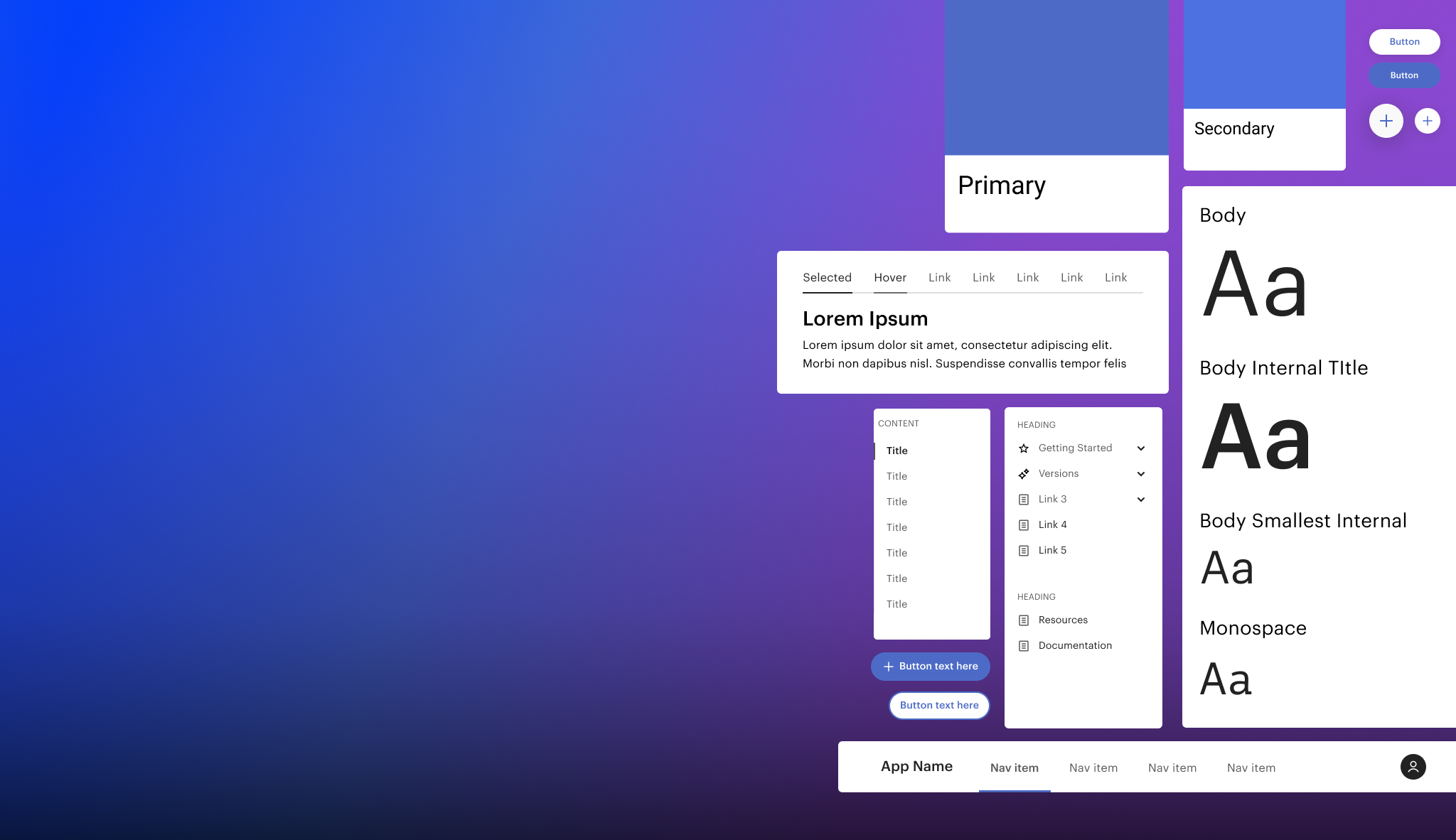
Internal Tools Design System
Etsy
Overview
Etsy’s internal tools are built for productivity and efficiency. These tools rely heavily on data and machine learning models to support the business needs. I led the design of a purpose-built design system for internal tools: a system that didn't exist before, built to serve the data-heavy, efficiency-driven workflows that the existing Buyer design system couldn't accommodate.
Result
A scalable, visually cohesive framework adopted across 7 engineering squads and 10 designers — with 2 components elevated into Etsy's core design systems.
Opportunity
With designers and engineers spending disproportionate time building and maintaining one-off solutions, we postulated that by providing a framework of standards, preset styles, and scalable components would allow teams to work more efficiently during design and implementation when developing internal tools.
Goals
Increase velocity
Visual coherence
Scalable architecture
Solution
A scalable design system for complex data tooling.
-
Guide the architecture to support layered data structures, user permissions, and complex workflows.
-
Component library to provide teams with standards, preset styles, and scalable components to efficiently develop internal productivity solutions.
-
Templates and layouts to drive consistency and streamline business-critical workflows.
-
A framework that balances ease of use with highly technical or dense information display needs.
-
Clear documentation and guidance to drive adoption.
“The tools we design for are data-heavy and have more complexities. The Buyer design system components don’t accommodate data manipulation and large data sets.”
- Staff Designer, Personalization
Process
Method triangulationMy objective was to gain a complete understanding of the users’ needs and the points of friction when designing for and implementing internal tools. I structured the execution in a way that allowed for multiple methods to raise confidence in the reliability of the results.
CollaborationThrough a series of activities, I identified themes across tools, workflows, common tasks, and overlap in user requirements.
Co-creation with internal tools designers, design system engineers, and design system design team provided multiple perspectives.
Diverge / convergeFollowing the double diamond process allows for multiple discovery methods. As I moved into the design and ideation stage, I explored different design concepts and refined as we formalize a proposal for an internal tools design system.